

MD&A · 2025
In this section4 topics
Overview of Operations
Section Introduction
Overview of Operations
The Overall Thailand Economy in 2025 expanded at a slower pace compared to the previous year amid continued pressure from domestic demand. Private consumption gradually recovered, supported in part by the government’s co-payment stimulus measures, while private investment remained limited. The tourism sector was affected by confidence factors and currency volatility, although early signs of improvement emerged in the second half of the year, driven by a recovery in certain manufacturing and export industries. Headline inflation remained at a low level; however, uncertainties surrounding global economic conditions, exchange rate movements, and the sustainability of recovery in consumption and tourism continue to pose key risks to the economic outlook going forward.
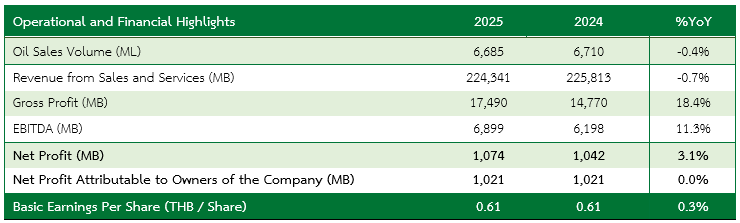
PTG Energy Public Company Limited (the “Company”) reported Net Profit of 1,074 MB in 2025, representing an increase of 3.1% YoY. EBITDA amounted to 6,899 MB, up 11.3% YoY, primarily driven by Gross Profit of 17,489 MB, which increased 18.4% YoY. The key driver was the strong performance of the Non-Oil segment, where Gross Profit grew 75.7% YoY. As a result, the contribution of Non-Oil Gross Profit increased to 37.1% of total Gross Profit, compared to 25.0% in 2024, reflecting a structural transformation toward a more balanced and higher-quality business portfolio.
Revenue from Sales and Services totaled 224,341 MB, declining slightly by 0.7% YoY, mainly due to a decrease in the average retail selling price in the Oil Business segment. However, total Oil sales volume across all channels remained broadly in line with the previous year, reflecting stable demand and the strength of the Company’s customer base. Meanwhile, the Non-Oil Business delivered outstanding growth, with revenue increasing 31.7% YoY to 23,654 MB. This was primarily driven by continued branch expansion and strong Same-Store Sales (SSS) growth of PunThai Coffee. As a result, the role of Non-Oil in the Company’s revenue and profit structure increased significantly.
Operating Results & Financial Condition
Introduction
Operating Results & Profitability
2025 Business Performance
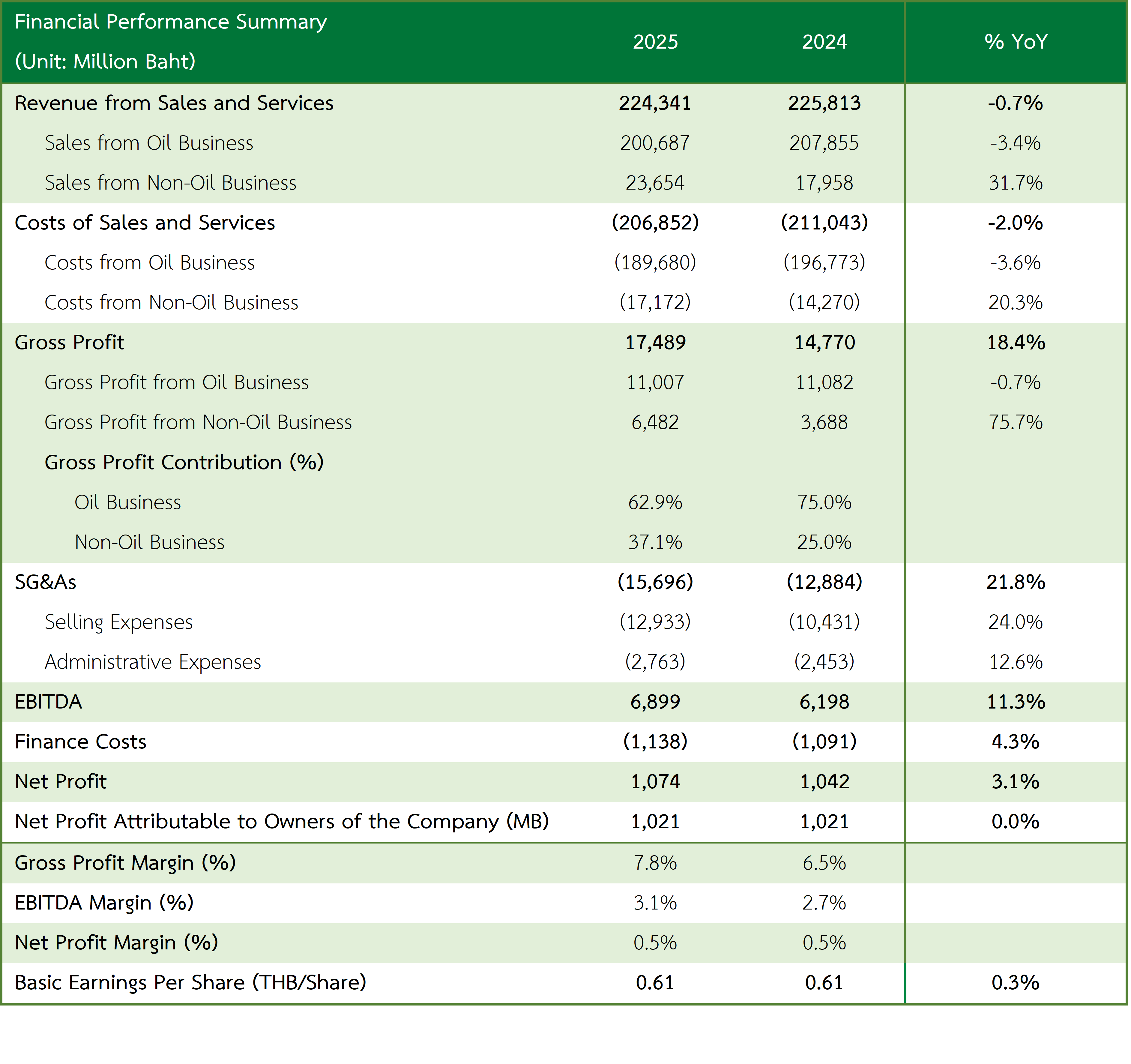
Revenue from Sales and Services in 2025 totaled 224,341 MB, decreasing by 0.7% YoY. The decline was primarily attributable to the Oil Business, which generated revenue of 200,687 MB, decreasing by 3.4% YoY. In contrast, the Non-Oil Business continued to expand strongly, with revenue increasing by 31.7% YoY to 23,654 MB. As a result, the revenue contribution from the Oil Business and Non-Oil Business accounted for 89.5% and 10.5%, respectively.
Cost of Sales and Services amounted to 206,852 MB, decreasing by 2.0% YoY, mainly driven by lower costs in the Oil Business in line with declining global crude oil prices. Gross Profit totaled 17,489 MB, representing an increase of 18.4% YoY. The growth was primarily supported by the Non-Oil Business, which recorded Gross Profit of 6,482 MB, increasing by 75.7% YoY. The expansion was mainly driven by PunThai Coffee, supported by significant branch expansion and strong recurring customer traffic. Consequently, the Non-Oil Gross Profit contribution increased to 37.1% of total Gross Profit, up from 25.0% in 2024. Meanwhile, Gross Profit from the Oil Business slightly decreased by 0.7% YoY to 11,007 MB, accounting for 62.9% of total Gross Profit.
Selling, General and Administrative Expenses totaled 15,696 MB, increasing by 21.8% YoY, in line with business expansion across all segments, particularly the continued growth of the Non-Oil Business. The increase was mainly attributable to higher employee expenses and depreciation. Overall expenses remained aligned with the Company’s operating plan.
The Company reported EBITDA of 6,899 MB, increasing by 11.3% YoY, while Net Profit amounted to 1,074 MB, increasing by 3.1% YoY. The YoY change detail can be elaborated as follows:
(+) An increase in Operating EBITDA/2, primarily driven by the significant growth in Gross Profit from the Non-Oil business, particularly the PunThai Coffee business, which continued to expand its branch network and delivered strong Same-Store Sales Growth (SSSG).
(+) A decrease in the Company’s effective tax rate compared to the previous year.
(+) An increase in Share of Profit from Investments in Associates and Joint Ventures, mainly attributable to improved operating performance of PPP Green Complex PCL (“PPPGC”) and Thai Paiboon Equipment Co.,Ltd (“TPB), following the increase in the Company’s investment stake to 33.3% in 2025. This was partially offset by a decrease in Share of Profit from “AMA,” primarily due to weaker performance in the marine transportation business, resulting from lower average freight rates and reduced shipment volumes.
Remarks:
The symbol “+” indicates factors that contribute to an increase in Net Profit, while the symbol “–” indicates factors that contribute to a decrease in Net Profit.
Operating EBITDA is calculated based on EBIT plus Depreciation & Amortization, excluding Foreign Exchange Gains/Losses, Share of Profit (Loss) from Investments in Associates and Joint Ventures, and Other Extraordinary Items. This provides a clearer reflection of the core business performance.
Operating Results by Business Units
2025 Oil Business Summary
Revenue from Sales and Services of the Oil Business in 2025 totaled 200,687 MB, decreasing by 3.4% YoY. The change in revenue can be explained as follows:
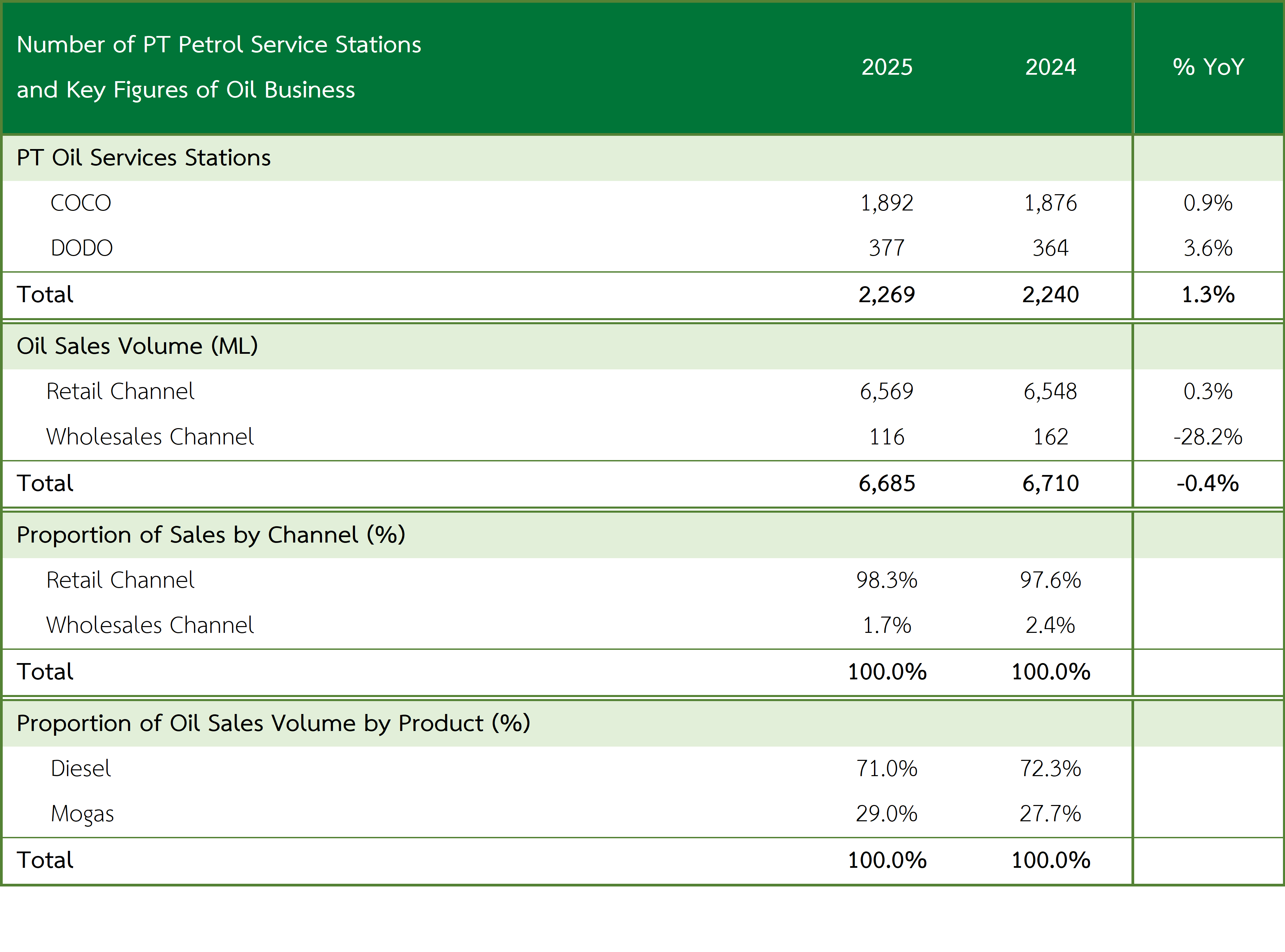
Total Oil Sales Volume across All Channels slightly decreased by 0.4%YoY to 6,685ML. The decline was primarily attributable to wholesale sales to the industrial segment, which decreased by 28.2%YoY, reflecting the domestic economic slowdown and intensified price competition among industrial customers. However, retail sales through PT service stations remained the core sales channel at 6,569 ML, broadly stable compared to the previous year. This reflects the strength of the Company’s core customer base and effective management of its service station network. The Company maintained retail market share at 22.0%, while the number of PT service stations increased by 1.3% YoY to 2,269 stations.
The Average Retail Selling Price at service stations was THB 30.02 per liter, decreasing by 3.1% YoY, primarily due to lower global oil prices compared to the previous year.
Revenue from the Oil Business accounted for 89.5% of total Revenue from Sales and Services.
Cost of Sales and Services totaled 189,680 MB, decreasing by 3.6% YoY. Gross Profit amounted to 11,007 MB, decreasing slightly by 0.7% YoY. The decline was mainly attributable to the slight reduction in total sales volume as mentioned above, as well as lower Gross Profit per liter under the Oil Fuel Fund management mechanism, which was not fully aligned with refinery price movements. Nevertheless, the Oil Business remained the largest profit contributor, accounting for 62.9% of total Gross Profit in 2025.
2025 Non-Oil Business Summary
Revenue from Sales and Services of the Non-Oil Business in 2025 totaled 23,654 MB, representing an increase of 31.7% YoY. The growth was primarily driven by strong performance across key segments.
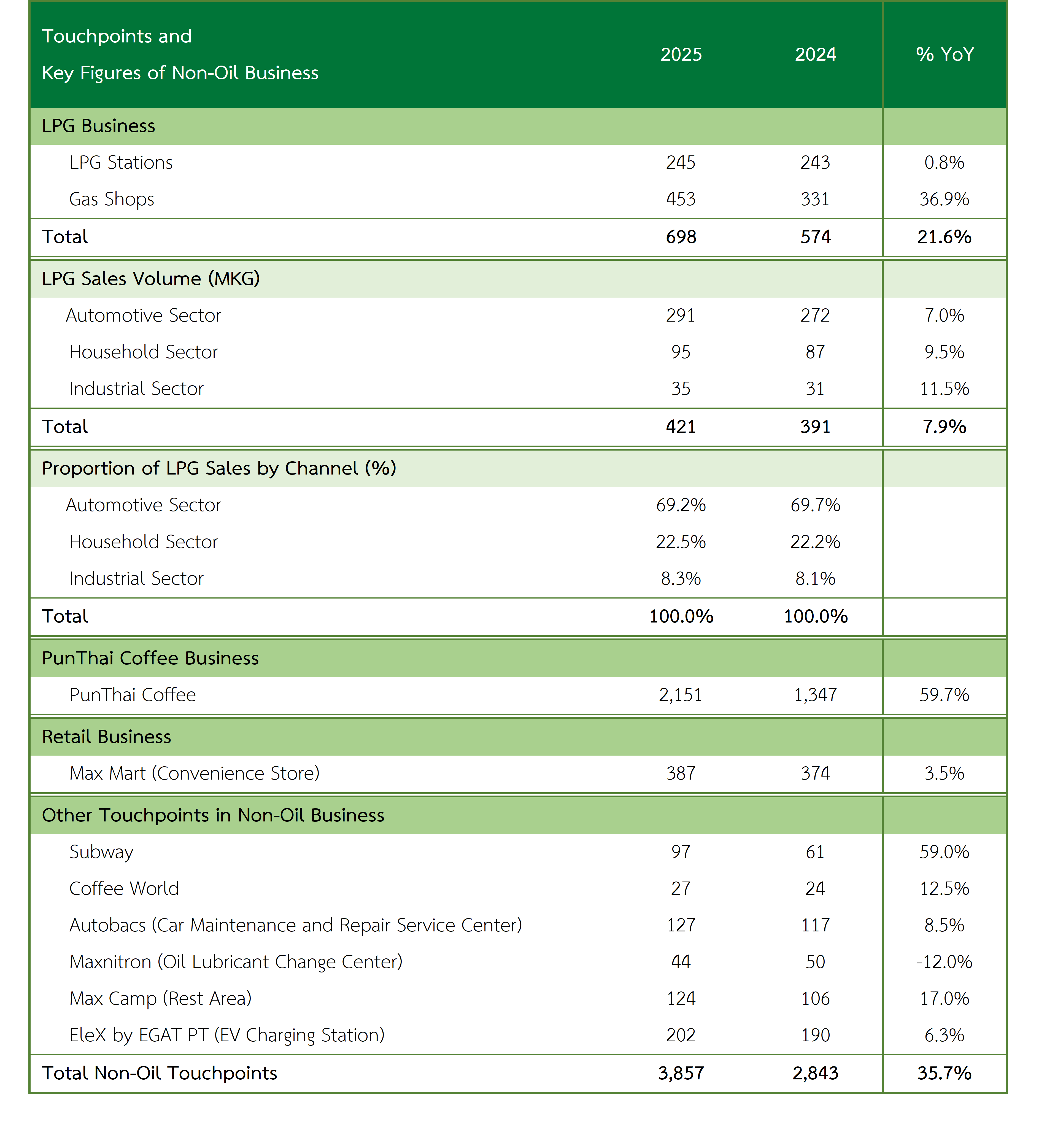
PunThai Coffee Business generated revenue of 5,309 MB, increasing by 134.3% YoY, or an increase of 3,043 MB compared to the previous year. The significant growth was driven by continued branch expansion, with a total of 2,151 branches as of year-end 2025, increasing by 59.7% YoY, reflecting an expansion pace of more than two branches per day. Growth was further supported by strong Same-Store Sales Growth (SSSG), primarily from recurring visits by membership customers, along with ongoing marketing campaigns that reinforced brand engagement.
LPG Business recorded revenue of 10,337 MB, increasing by 8.4% YoY. The growth was supported by total LPG sales volume across all channels, which increased by 7.9% YoY to 421 MKG, along with an increase in average selling price to THB 24.56 per KG, up 0.6% YoY. As of year-end 2025, LPG branches totaled 698 branches, increasing by 21.6% YoY.
Revenue from the Waste-to-Energy Business totaled 472 MB, decreasing by 15.3% YoY. Such revenue was recognized together with an equal amount of cost in 2025 under TFRIC 12 accounting treatment, as previously described.
As of year-end 2025, the Company operated a total of 3,857 Non-Oil branches, increasing by 1,014 branches or 35.7% YoY. Revenue from the Non-Oil Business accounted for 10.5% of total revenue, increasing from 8.0% in the previous year, reflecting the continued expansion of diversified income streams.
Cost of Sales and Services of the Non-Oil Business totaled 17,172 MB, increasing by 20.3% YoY. As a result, Gross Profit from the Non-Oil Business amounted to 6,482 MB, increasing by 75.7% YoY. Non-Oil Gross Profit accounted for 37.1% of total Gross Profit, comprising 16.1% from PunThai Coffee, 8.9% from the LPG Business, and 12.1% from other businesses, including Max Mart convenience stores, Autobacs automotive service centers, Subway restaurants, and the Maxnitron lubricant business.
Liquidity & Capital Adequacy
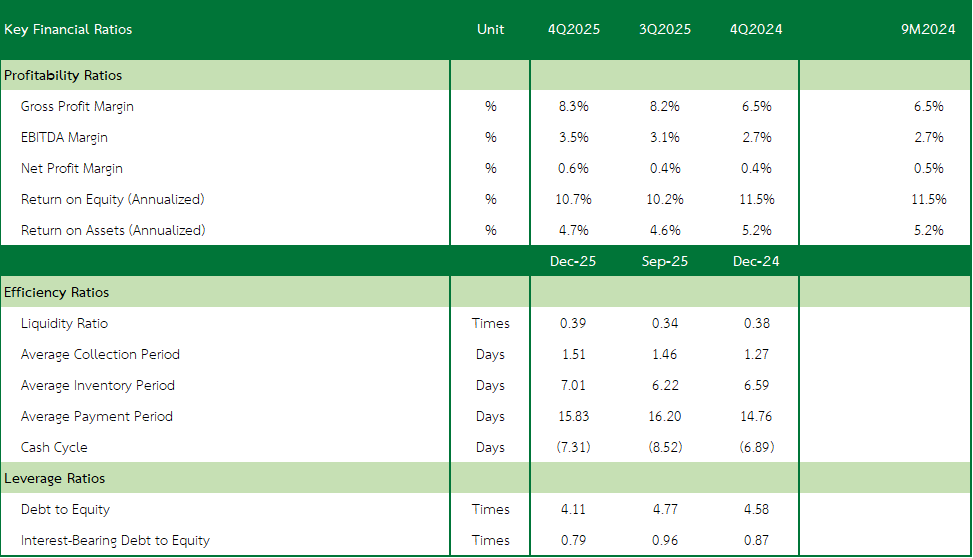
Asset Management Capability
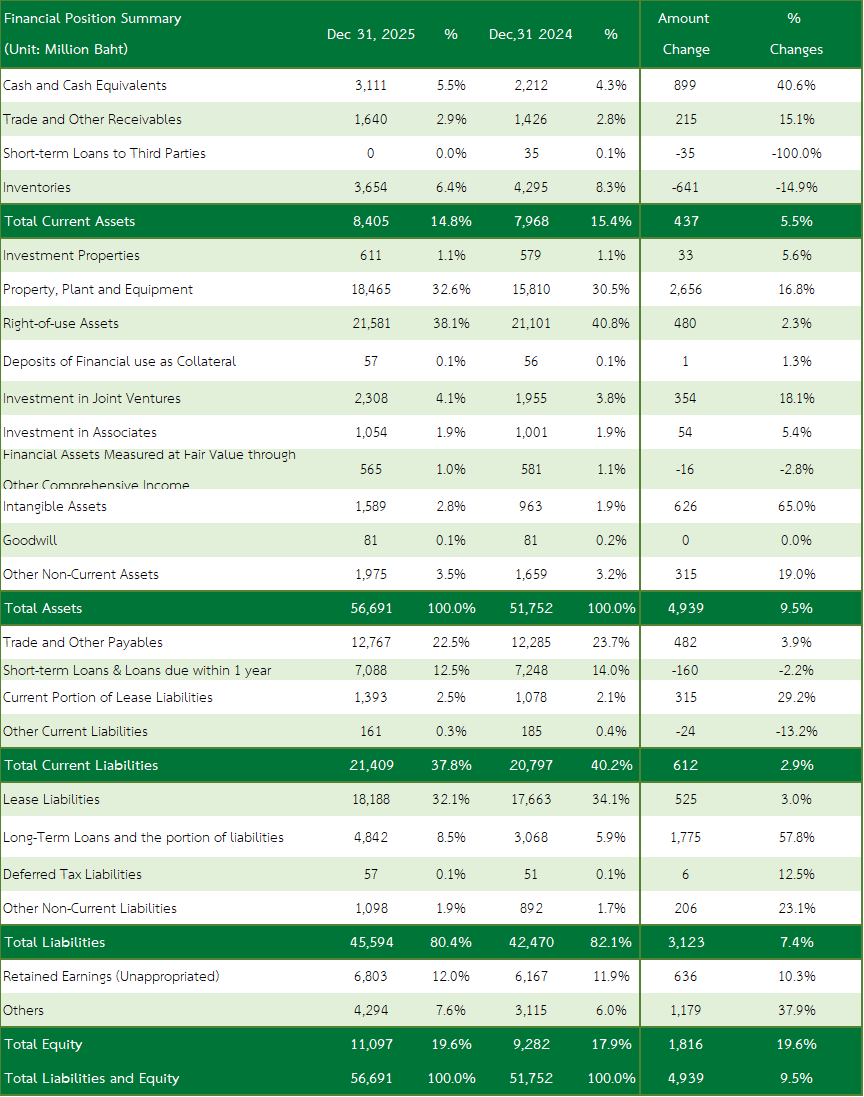
As of December 31, 2025, the Company recorded Total Assets of 56,691 MB, increasing by 4,939 MB or 9.5% from the end of 2024. The increase was primarily driven by:
Property, Plant, and Equipment increased by 2,655 MB, and Right-of-Use assets increased by 480 MB reflecting continued capital investment in Non-Oil expansion and service station development.
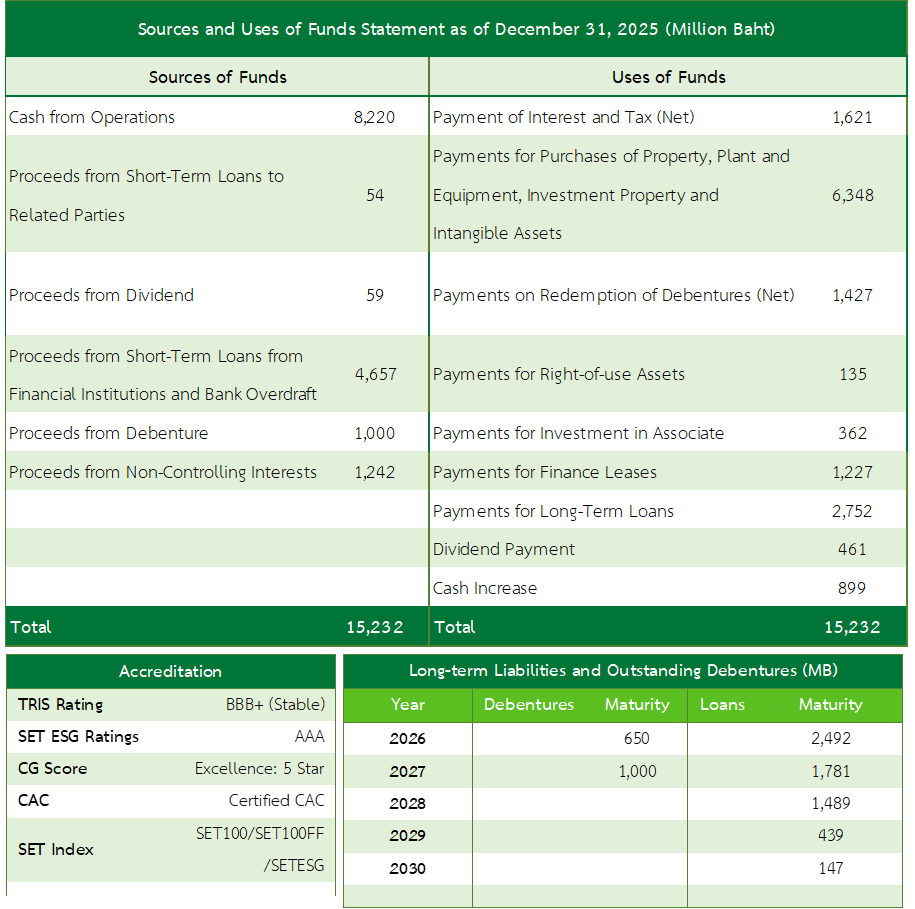
Cash and Cash Equivalents rose by 899MB, supported by stronger operating cash flows as below table.
Intangible assets increased by 627MB, mainly from the recognition of service concession rights under TFRIC 12 for the WTE power plant project.
These increases were partially offset by 4) a 641 MB decrease in inventories, consistent with oil inventory management aligned with market conditions during the period.
Total Liabilities amounted to 45,594 MB, up 3,124 MB or 7.4% from the end of 2024, mainly due to
Long-Term Loans and debentures increased by1,774MB to support investment and business expansion plans.
Trade and Other Payables increased by482MB, in line with higher purchasing volumes and credit term management.
Lease Liabilities increased by 525MB in accordance with Right-of-Use assets, while Total Shareholders’ Equitystood at 11,097 MB, increasing by 1,815MB or 19.6% from the end of 2024, primarily reflecting profit generated during the period.
Other Analysis
| Title | Description |
|---|---|
| Sustainability Management | The Company recognizes the importance of conducting business responsibly and with consideration for all stakeholders. It has therefore integrated its commitment to sustainable business development into its operational strategies, with the goal of enabling everyone to access a life of “Well-Being and Contentedness” in every dimension. With the objective of driving sustainable organizational growth across all aspects, the Company continues to emphasize a balanced approach among economic, social, and environmental development. In 2025, the Company implemented various initiatives in alignment with the principles of good corporate governance, ensuring care for all stakeholder groups while reinforcing its social and community responsibility. The details are as follows: Excellence in Management and Corporate Governance Mr. Pitak Ratchakitprakarn, Chief Executive Officer and President of the Company, was honored with the “Outstanding CEO” award in the Petroleum Industry category at the IAA Awards for Listed Companies 2025. The award reflects his vision and leadership in driving the Company’s sustained growth. In addition, the Company received the “Outstanding Investor Relations” award from the Stock Exchange of Thailand, demonstrating excellence in transparent and effective communication with the investment community. The Company’s commitment to embedding “ESG DNA” into the corporate culture has also resulted in strong governance recognition. The Company achieved a 5-star rating (Excellent) in the Corporate Governance Report (CGR) assessment and received a full score of 100 in the Annual General Meeting (AGM) quality assessment for consecutive years, demonstrating high standards of transparency and accountability. Furthermore, the Company was rated SET ESG Ratings: AAA (the highest level) by the Stock Exchange of Thailand. This recognition reinforces investor confidence in the Company’s commitment to sustainable value creation for all stakeholders. Enhancing Quality of Life for Employees and Society The Company places strong emphasis on human capital development, recognizing that “People” are the key drivers of long-term sustainability. Continuous efforts to promote employee growth and engagement led to the Company receiving the Employer Branding award at the HR Excellence Awards 2025 for the second consecutive year, reflecting its success in building an organization where employees take pride in their workplace. At the same time, the Company conducts its business in accordance with principles of human rights and equality. It was recognized with the Human Rights Awards as an outstanding human rights organization and received the Leader of Social award at the Future Trends Awards, demonstrating a commitment to creating tangible shared value for Thai society. Environmental Commitment and Greenhouse Gas Management The Company has implemented proactive measures toward achieving Carbon Neutrality in 2030 and successfully registered 3 voluntary greenhouse gas reduction projects under Thailand’s T-VER standard:
The Company remains committed to creating shared value through promoting economic opportunities, improving quality of life, and supporting sustainable community development under its vision of "Well-Being and Contentedness." These efforts not only empower surrounding communities but also enhance stakeholder confidence and support the Company’s long-term sustainable growth. |
| 2025 Economy and Industry Overview | The Overall Thailand Economy in 2025 expanded gradually from the previous year amid continued pressure from domestic demand. The recovery in private consumption remained uneven, while private investment slowed. The tourism sector also faced headwinds from safety concerns, natural disasters in certain areas, and the appreciation of the Thai Baht. As a result, cumulative international tourist arrivals totaled 32,974,321 persons, representing a decrease of 2,571,393 persons compared to the prior year. Nevertheless, the economy continued to receive partial support from public sector spending, including the “Half-Half Co-Payment” stimulus scheme, as well as improving performance in certain manufacturing and export industries, particularly electronics and semiconductors, in line with global demand for technology products. Meanwhile, headline inflation remained at a low level, primarily due to declines in energy and fresh food prices. In 2025, the Overall Oil Consumption Volume in Thailand decreased by 1.7% YoY. Diesel consumption declined by 2.9% YoY, while gasoline consumption remained broadly in line with the same period of the previous year. Oil Sales Volume through Service Stations nationwide in 2025, nationwide oil sales volume through service stations declined by 0.9% YoY, primarily due to a 2.3% YoY decrease in diesel sales amid a slowing economic environment. In contrast, gasoline sales increased by 1.6% YoY. During the year, the Oil Fuel Fund Executive Committee requested cooperation from oil service stations to maintain the retail diesel price at no more than THB 33.00 per liter, continuing from the diesel price stabilization measure approved by the Cabinet on 31 October 2024, utilizing the Oil Fuel Fund mechanism as the primary tool, under the condition that global crude oil prices remain below USD 100 per barrel. Subsequently, the Committee resolved to reduce the retail diesel price to THB 31.44 per liter and lower gasoline prices by THB 0.50 per liter, effective 4 October 2025. Diesel prices were further reduced to THB 30.94 per liter, alongside an additional THB 0.30 per liter reduction in gasoline prices effective 21 October 2025, under the “Quick Big Win” policy. A further reduction of THB 0.50 per liter for both diesel and gasoline was implemented on 24 December 2025 to alleviate energy cost burdens on the public and mitigate the impact on households and businesses amid global diesel price volatility driven by economic concerns and financial market fluctuations related to movements in the U.S. dollar. Overall LPG Consumption across All Channels in 2025 increased by 0.9% YoY. Household LPG consumption rose by 2.0% YoY, while industrial consumption increased by 0.4% YoY. In contrast, automotive LPG consumption declined by 3.0% YoY. The household segment remained the largest contributor, accounting for 57.1% of total consumption, up from 56.4% in 2024. |
Debt Securities with Financial Ratio Requirements
Debt Securities with Financial Ratio Requirements Issued?
Yes
Can the Company Maintain the Reported Financial Ratios?
Yes
Explanation
The Company has successfully maintained its financial covenants as stipulated for its debenture issuance at the end of 2025.
Factors That May Affect Financial Condition
Factors or Incidents That May Materially Affect Financial Condition
According to the Office of the National Economic and Social Development Council (NESDC) as of 16 February 2026, Thailand’s economy in 2026 is projected to grow within a range of 1.5–2.5%. Private consumption is expected to grow by approximately 2.1%, while private investment is projected to increase by around 1.9%, under a low inflation environment of approximately 0.2%. The outlook reflexes economic growth will continue to be primarily driven by domestic demand, although overall expansion remains moderate.
The Company believes that businesses linked to everyday consumption and domestic economic activities continue to have the potential to grow above the average GDP rate. The Company Group’s diversified structure, encompassing both Oil and Non-Oil businesses, provides a balanced combination of growth and cash flow stability.
Beyond network expansion, a key structural growth driver for both Oil and Non-Oil businesses is the continued development of the Max World Ecosystem membership platform. In particular, the Flexi Benefit program for PT Max Card Plus members enables customers to tailor benefits to their lifestyle preferences across both the Company’s Group businesses and partners. This approach enhances value for money, increases cross-utilization across business units, and supports sustained SSSG. At the same time, leveraging insights data from a membership base of over 25 million members improves marketing budget efficiency and enhances Customer Lifetime Value within the ecosystem.
Non-Oil Business: Driving Sustainable Growth Through Everyday Consumer Businesses
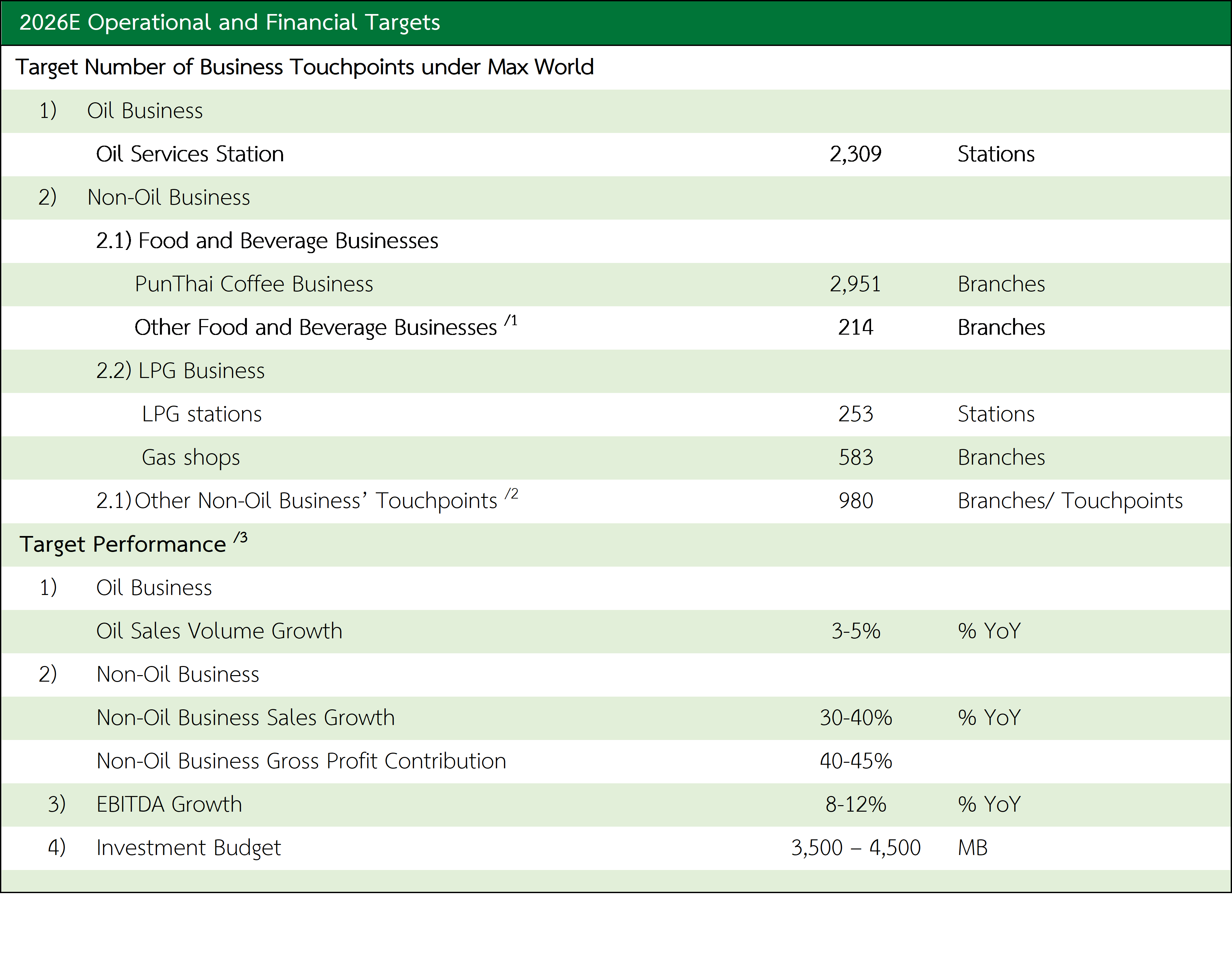
The Company continues to expand its Non-Oil business while enhancing operational efficiency, targeting Non-Oil revenue growth of 30–40% YoY and aiming to maintain gross profit contribution in the range of 40–45% through portfolio management, cost control, and an increasing contribution from higher-margin businesses.
PunThai Coffee business remains the core growth engine of the Non-Oil business. In 2026, the Company targets the addition of over 800 new branches, while expanding its customer base, particularly among younger consumers Expansion will focus on high-potential locations such as universities and urban communities to support long-term growth. The Company continues to drive brand engagement through proactive marketing activities and strategic partnerships. At the same time, the Company maintains quality standards through structured training and continuous product development. This strategy supports customer retention, customer acquisition, and sustainable revenue growth amid ongoing network expansion.
In addition, the Company has strengthened food business portfolio with the launch of “PunThai Boat Noodles.” 3 pilot branches were established in the prior year. In 2026, approximately 50 additional branches are planned, with a balanced expansion both inside and outside service stations for to capture urban and highway traffic. This expansion enhances synergy between food and beverage businesses and increases customer spend per visit.
Other Food and Beverage businesses continues to expand, including SUBWAY, which strengthens food business portfolio diversification and reinforces PT service stations as integrated lifestyle destinations.
In the LPG business, the Company targets expansion to 836 branches/service stations, which is primarily driven by household demand, which benefits from stable demand in residential and small-business sectors. Other Non-Oil businesses, including Max Mart (convenience stores), Autobacs (auto care and maintenance service centers), the new PT GIGA EV station format, and EleX by EGAT PT (EV charging stations) continue network expansion to enhance brand visibility and long-term customer accessibility.
At the same time, the Company remains focused on product development, service standards, and customer experience enhancement across all business units. These initiatives reinforce the strength of the Non-Oil businesses as a key revenue contributor and a structural growth driver supporting balanced and sustainable long-term growth for the Company Group.
Oil Business: Remaining a Core Driver of Cash Flow and Earnings Stability for the Company Group
The Company views domestic mobility and transportation activities as ongoing structural drivers of fuel demand within the economy. Accordingly, the Company targets oil sales volume growth of 3%–5% YoY, despite a moderate overall economic expansion.
The Company continues to pursue a quality-driven growth strategy by elevating the efficiency of existing service stations through renovation, alongside selective new service station expansion in high-traffic and high-potential locations to improve investment efficiency and deliver sustainable long-term returns. Under this strategy, the Company expects the total number of service stations to reach 2,309 by 2026.
At the same time, the Company leverages its membership of over 25 million members as a key growth engine. Through behavioral data analytics, targeted marketing initiatives, and personalized benefit offerings, the Company enhances service frequency, strengthens customer engagement, and supports steady oil sales volume growth, even amid a volatile economic environment.